Senegal, The Atlantic Edge
Dakar's music, Saint-Louis's colonial bones, and the bird-thick deltas of the Sine-Saloum — West Africa's gentlest first step.
The essentials, gathered.
- Best season
- Nov – May (dry, cooler)
- Currency
- West African CFA Franc (XOF)
- Language
- French · Wolof
- Time zone
- GMT (UTC+0)
- Plug
- Type C / D / E / K, 230V
- Entry
- Visa-free 90 days for most EU, UK, US and Canadian passports
The right month.
November to May is the dry season — 25–30°C in Dakar with cool Atlantic evenings. June to October is the rains and short but heavy. The harmattan (dusty trade wind) can haze the sky in December and January. For bird migrations in the Sine-Saloum, aim for January to March.
From the airport, onward.
Blaise Diagne International (DSS) sits 50 km east of Dakar — pre-book a transfer (around 25,000 XOF) or take the new TER train to the city. Inside Dakar, Yango (Russian Uber equivalent) and Heetch are reliable. For Saint-Louis, take a Sept-Place shared car or a private driver (4h). Domestic flights to Cap Skirring (Casamance) save a long, complicated road journey.
Three neighbourhoods, three personalities.
Almadies & Ngor (Dakar)
Westernmost point of mainland Africa — surfing, sunsets, and the city's polished hotels.
Île de Gorée
20 minutes by ferry from Dakar — UNESCO former slave-trade island, unforgettable to sleep on overnight.
Saint-Louis (Île)
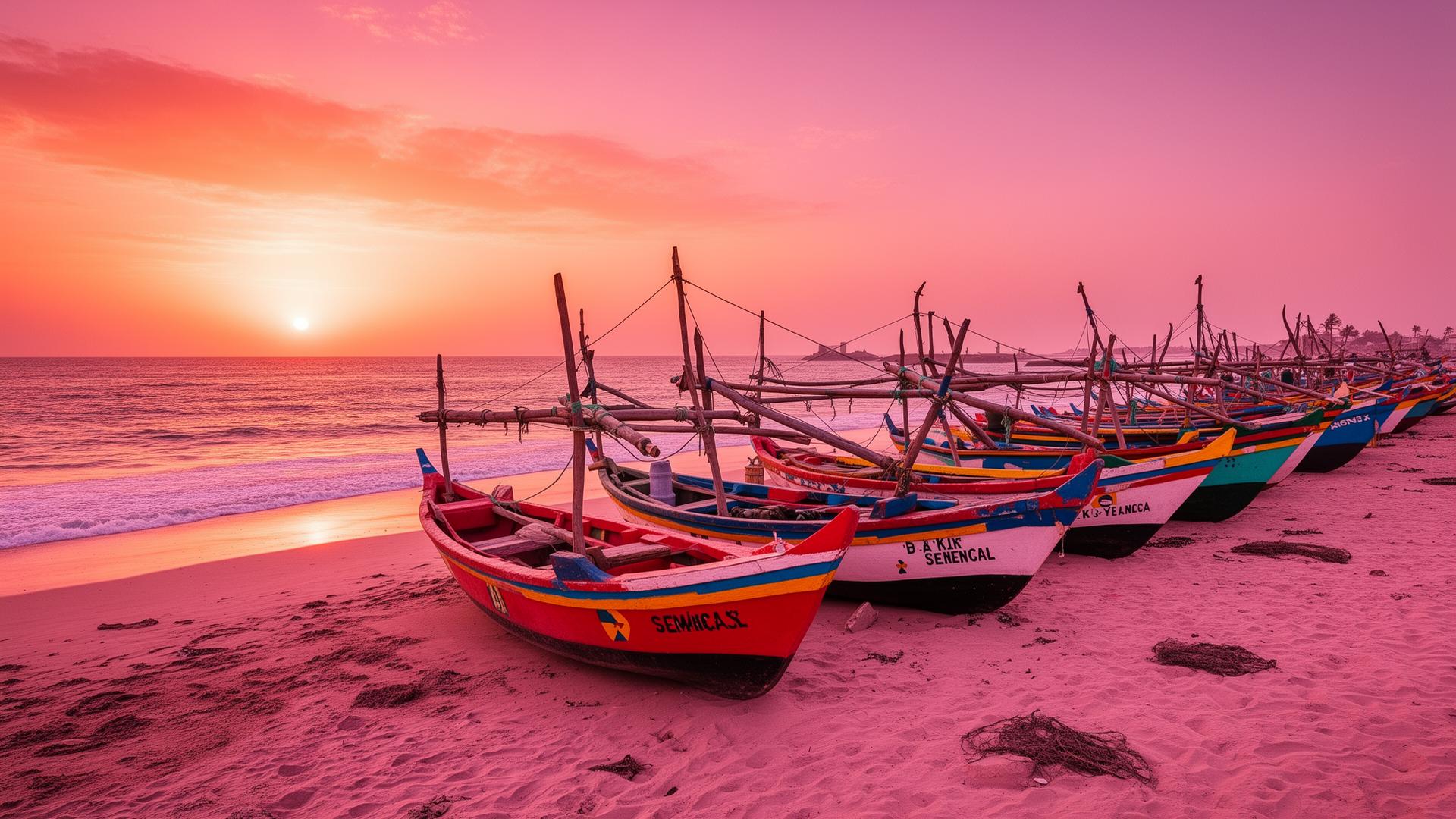
Colonial island town at the mouth of the Senegal River — colour, fishermen, the country's jazz festival in May.
What to order, and where.
Thieboudienne
The national dish — fish, rice and tomato cooked together; Chez Loutcha in Dakar is the institution.
Yassa poulet
Chicken in caramelised onion and lemon — every neighbourhood maquis.
Mafé
Slow-cooked peanut stew with lamb or beef — best at family-run Casamance restaurants.
The dossier.
Île de Gorée
The Maison des Esclaves and the Door of No Return — a half-day with a local guide.
Lac Rose (Lake Retba)
The pink salt lake an hour east of Dakar — extraction by hand at dawn.
Sine-Saloum delta
Pirogue trip among mangroves, oyster banks and pelican colonies.
Saint-Louis colonial centre
Pastel facades, horse-drawn caleches, Senegal's first capital.
Casamance south
Cap Skirring's beaches, Diola villages, the quietest stretch of Atlantic coast.
What our advisors would tell you.
- 01
Always agree taxi fares before getting in (or use Yango/Heetch which run on app pricing).
- 02
Yellow fever vaccination certificate is required at entry. Carry the yellow card.
- 03
Friday afternoon is for prayers — many shops close 13:00–15:00.
- 04
Dress modestly outside beach resorts: shoulders and knees covered, especially in Saint-Louis and Touba.
- 05
Tip 10% in restaurants; small XOF notes (500–1,000) for porters and parking attendants.
- 06
Photograph people only with permission — Senegalese custom takes it seriously.
One of West Africa's safest countries. The risks are petty theft in Dakar markets, road accidents on the Dakar–Saint-Louis highway, and malaria (prophylaxis recommended). The Casamance region is now stable but check current advice before crossing the Gambia overland.
Plan Senegal with us.
Share what you have in mind. One of our advisors will reply within 24 hours with a quietly composed itinerary.